
CWST Cleaning and Disinfection
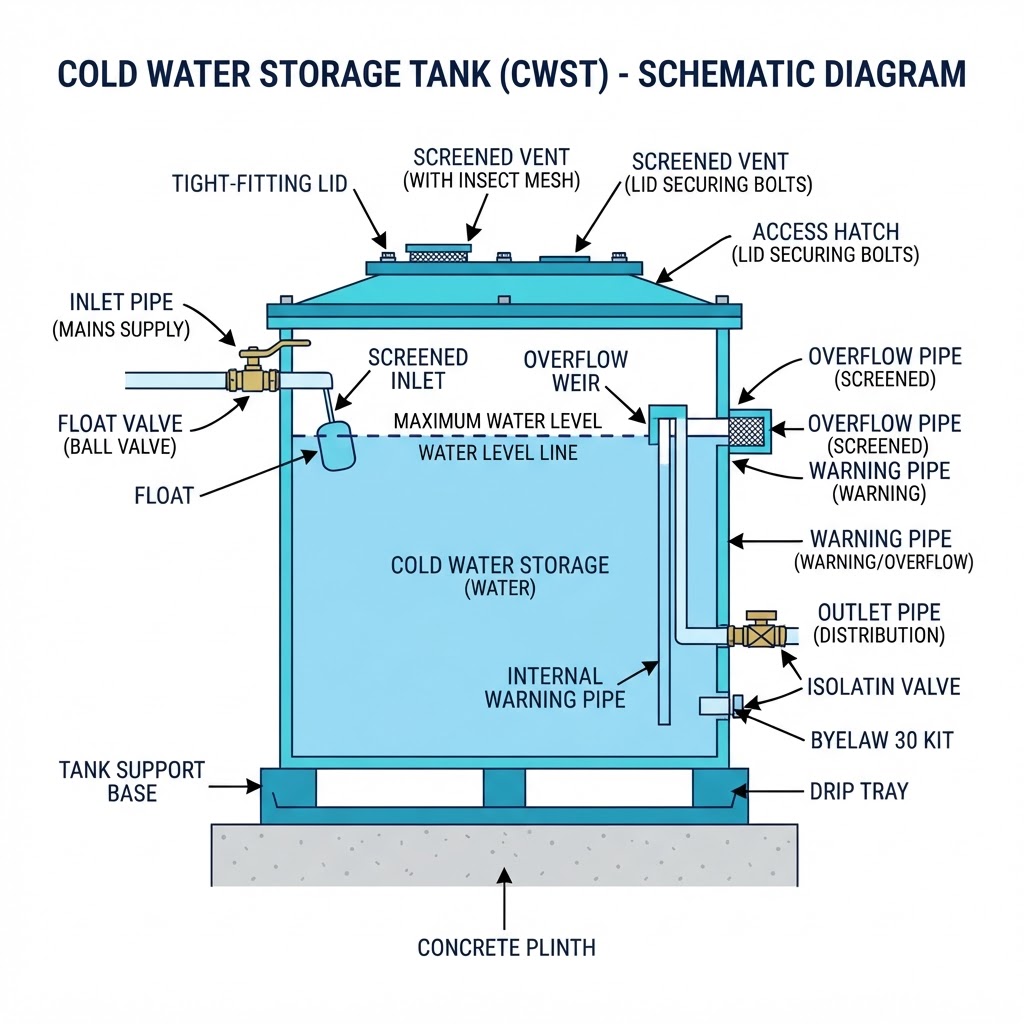
Watch: Step-by-Step Demo
Purpose
To clean and disinfect cold water storage tanks to remove contamination and make the water safe again.
Required Equipment
Sodium hypochlorite (chlorine), chlorine test kit, brushes, buckets, hoses
Required PPE
Gloves, safety goggles, waterproof apron/overalls, safety boots, dust mask, hard hat
Required Tools
Brushes, buckets, hoses, chlorine test kit, dosing equipment, submersible pump for draining
Step-by-Step Method
- Turn off the tank from the system (close inlet and outlet valves).
- Drain the tank completely using the drain valve or a pump.
- Clean all inside surfaces - remove dirt, slime, scale, and debris using non-abrasive brushes.
- Pay attention to corners, seams, and the bottom.
- Remove all debris from the tank.
- Refill the tank to about 25% full.
- Add sodium hypochlorite to get 50 ppm free chlorine.
- Spread the chlorine solution to all inside surfaces (use a pump or brush).
- Keep 50 ppm for at least 1 hour.
- After 1 hour, check chlorine level - should be 50 ppm or above.
- Drain the chlorine solution to a safe place.
- Rinse the tank thoroughly with clean water.
- Refill the tank and check chlorine - should match mains water level.
- Put back in service and write down what you did. Take photos.
Pass Criteria
Tank inside is clean - no dirt, slime, or contamination. Chlorine at mains level after rinsing. No debris left. Water temperature 20 degrees C or below.
Fail Criteria
Visible contamination still there after cleaning. Chlorine above mains level (not rinsed enough). Tank still warm (above 20 degrees C). Dirt in corners or seams.
Common Problems & Corrections
Slime comes back quickly - Check inlet/outlet position, temperature, and tank size. Think about making the tank smaller. Scale building up - Think about water treatment (softener or dosing). Chlorine still high after rinsing - Keep rinsing until it matches mains. Tank warm above 20 degrees C - Improve ventilation, insulate tank, or move it. Hard to get access - Think about adding more access hatches.
Warnings
Sodium hypochlorite is corrosive. Wear full PPE. Make sure there is enough air. NEVER mix chlorine with acids. Discharge must go to an approved place - chlorine kills fish. Confined space rules may apply.
Relevant Legislation
ACOP L8 (4th Edition), HSG274 Part 2, Water Supply (Water Fittings) Regulations 1999