
ACOP L8 - The Legionella Rule Book
The main set of rules for stopping Legionnaires' disease in water systems. Written by the HSE.
What is ACOP L8?
ACOP L8 is the rule book for stopping Legionnaires' disease in water systems. It is written by the Health and Safety Executive (HSE). If you work with water systems, you must follow these rules.
What the law says you must do
-
Check for risk - Someone must look at the water system and work out if Legionella could grow there. This is called a risk assessment.
-
Stop the risk - If there is a risk, you must put steps in place to control it. The easiest way is to use temperature (see below).
-
Put someone in charge - A person must be chosen to take care of the water system. They are called the 'responsible person'. They need to know what they are doing.
-
Keep records - Write down what you check, what you find, and what you do about it. Keep these records for at least 5 years.
-
Make sure people are trained - Anyone checking or working on the water system must know what they are doing.
The golden rule - Temperature
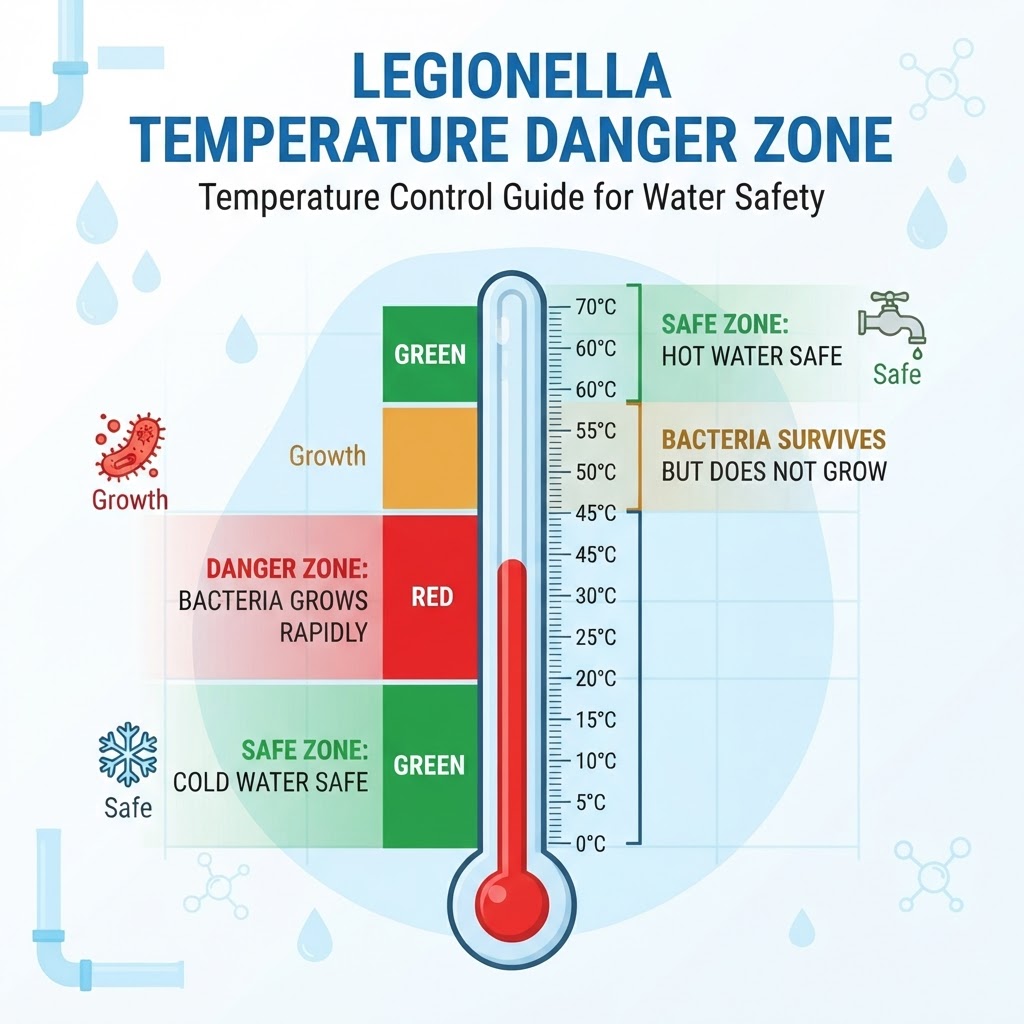
The best way to stop Legionella is by controlling water temperature:
- Hot water storage: 60 degrees C or hotter
- Hot water at the tap: 50 degrees C or hotter within 1 minute (55 degrees C in hospitals and care homes)
- Cold water: 20 degrees C or colder
Bacteria grow best between 20 and 45 degrees C. By keeping hot water hot and cold water cold, you stop them growing.
What happens if you do not follow the rules?
You could be taken to court. People can die from Legionnaires' disease. It is a serious illness caused by breathing in water droplets that contain the bacteria.
Warnings & Safety
Not following ACOP L8 can lead to prosecution. Legionnaires' disease can be fatal.
Relevant Legislation
Health and Safety at Work Act 1974, COSHH Regulations 2002, ACOP L8 (4th Edition)