
HSG274 Part 2 - Hot and Cold Water Systems
The how-to guide for controlling Legionella in hot and cold water systems. Covers temperature checks, TMVs, and tank inspections.
What is HSG274 Part 2?
This is the practical guide that goes with ACOP L8. It tells you exactly what to do to keep hot and cold water safe.
Temperature - What You Need to Check
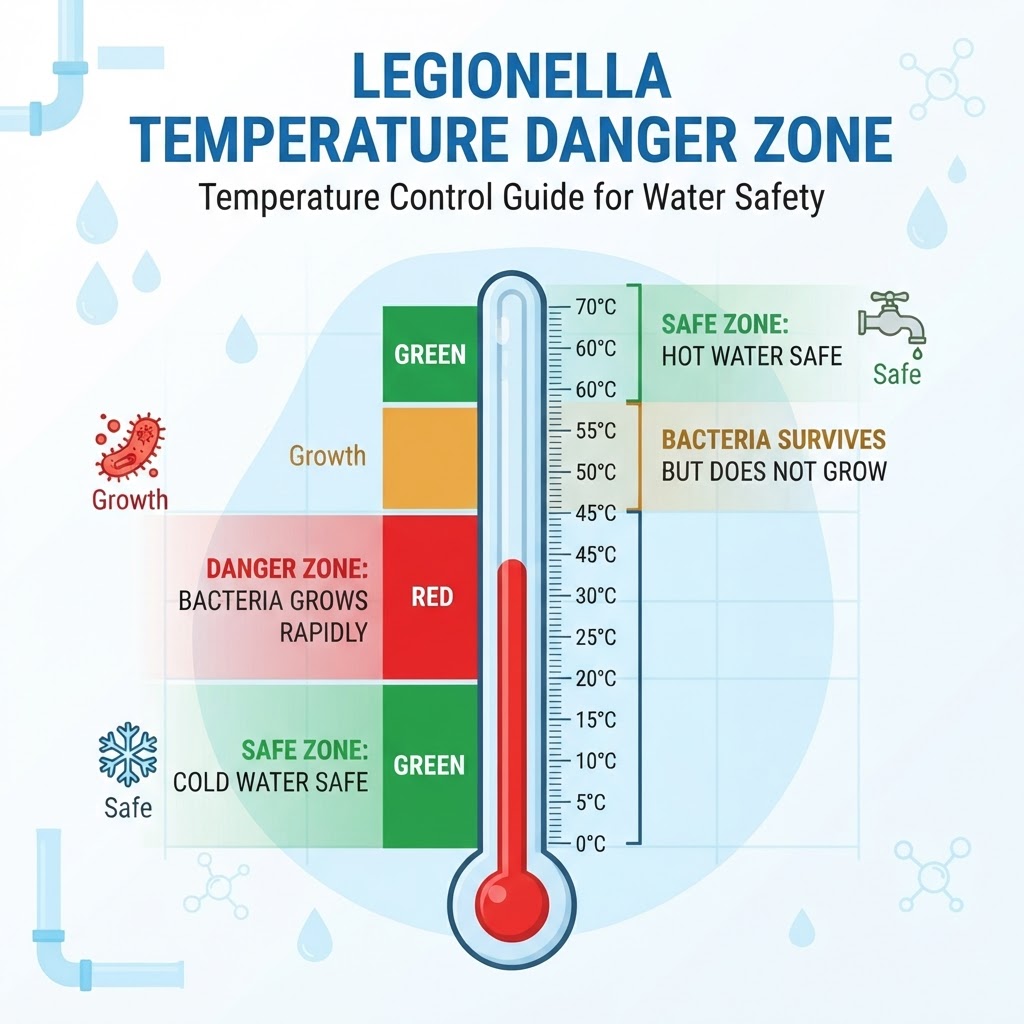
Hot Water
- Stored in the cylinder: 60 degrees C or hotter at all times
- Coming back to the cylinder (return): 50 degrees C or hotter (55 in hospitals)
- At the tap: 50 degrees C or hotter within 1 minute of turning it on
Cold Water
- In the tank and pipes: 20 degrees C or colder
- At the tap: 20 degrees C or colder within 2 minutes
Sentinel Outlets - What Are They?
Sentinel outlets are the taps that are checked every month. They are:
- The nearest and furthest hot tap on each pipe loop
- The nearest and furthest cold tap on each pipe loop
- The hot water return pipe at the cylinder
Think of them as the 'first and last' taps on each circuit. If these pass, the rest are likely fine.
TMVs (Mixer Valves)
Mixer valves blend hot and cold water so it comes out at a safe temperature (usually 41 degrees C max). This stops people getting scalded.
- They must be serviced once a year (at least)
- The failsafe must be tested - if the cold water stops, the hot must stop too
- If the failsafe does not work, the valve is dangerous and must be fixed
Cold Water Storage Tanks (CWST)
- Check them once a year
- They must have a tight lid to stop dirt and bugs getting in
- All openings (overflow, vent) must have fine mesh to stop insects
- Water must stay below 20 degrees C
- Clean and disinfect if they are dirty or contaminated
When to Test for Legionella
You do not usually need to test water for Legionella if temperatures are being maintained. You should test when:
- Temperatures are not right
- The system has been changed
- Someone has caught Legionnaires' disease
- You are in a hospital or care home
Warnings & Safety
Hot water at 60 degrees C will scald you in seconds. Mixer valves must be fitted where vulnerable people could be scalded.
Relevant Legislation
ACOP L8 (4th Edition), HSG274 Part 2, COSHH Regulations 2002