
Back to Knowledge Base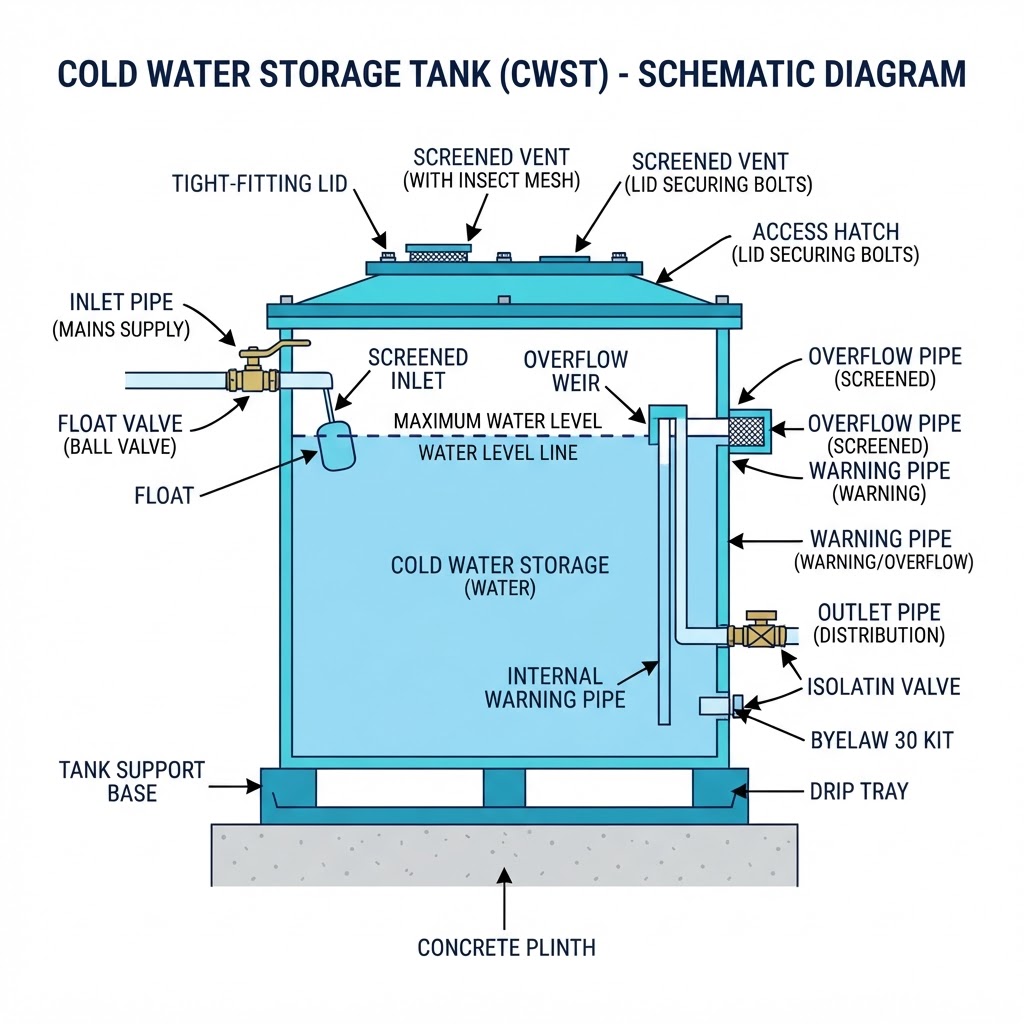
Water Systems
Checking a Cold Water Storage Tank (CWST)
How to inspect cold water storage tanks to make sure they are clean and safe.
Watch: How It Works
Why We Check Cold Water Tanks
Cold water storage tanks (CWSTs) hold cold water for the building. If they are dirty, warm, or open to bugs, bacteria can grow. We check them to make sure they are clean, cold, and sealed.
How Often to Check
- Once a year (at least)
- Twice a year if the water is often above 18 degrees C
What to Look For
The Lid
- Must be strong, tight-fitting, and secured
- No gaps where dirt or insects could get in
Mesh Screens
- All openings (overflow, warning pipe, vent) must have fine mesh (0.65mm or smaller)
- This stops insects and bugs getting in
Inside the Tank
- No dirt, slime, scale, or rust
- No debris at the bottom
- Water looks clean and clear
Temperature
- Water must be 20 degrees C or colder (ideally 15 degrees C or less)
Inlet and Outlet
- The inlet (where water comes in) and outlet (where water goes out) should be at opposite ends
- This stops water sitting still (stagnating)
Other Things to Check
- The float valve works properly and the water level is right
- The overflow is visible (warning pipe) and screened
- The vent is screened and points downward
- There is a drain valve that works
When to Clean the Tank
Clean and disinfect the tank if:
- There is visible dirt, slime, or debris
- The water is often above 20 degrees C
- After any repairs or changes
- After someone has caught Legionnaires' disease
- There is visible rust or scale
Warnings & Safety
Going inside a tank can be a confined space. You may need a permit and gas detector. Never go in alone. Make sure the electricity is off if there is any equipment inside.
Relevant Legislation
ACOP L8 (4th Edition), HSG274 Part 2, Water Supply (Water Fittings) Regulations 1999