
Back to Knowledge Base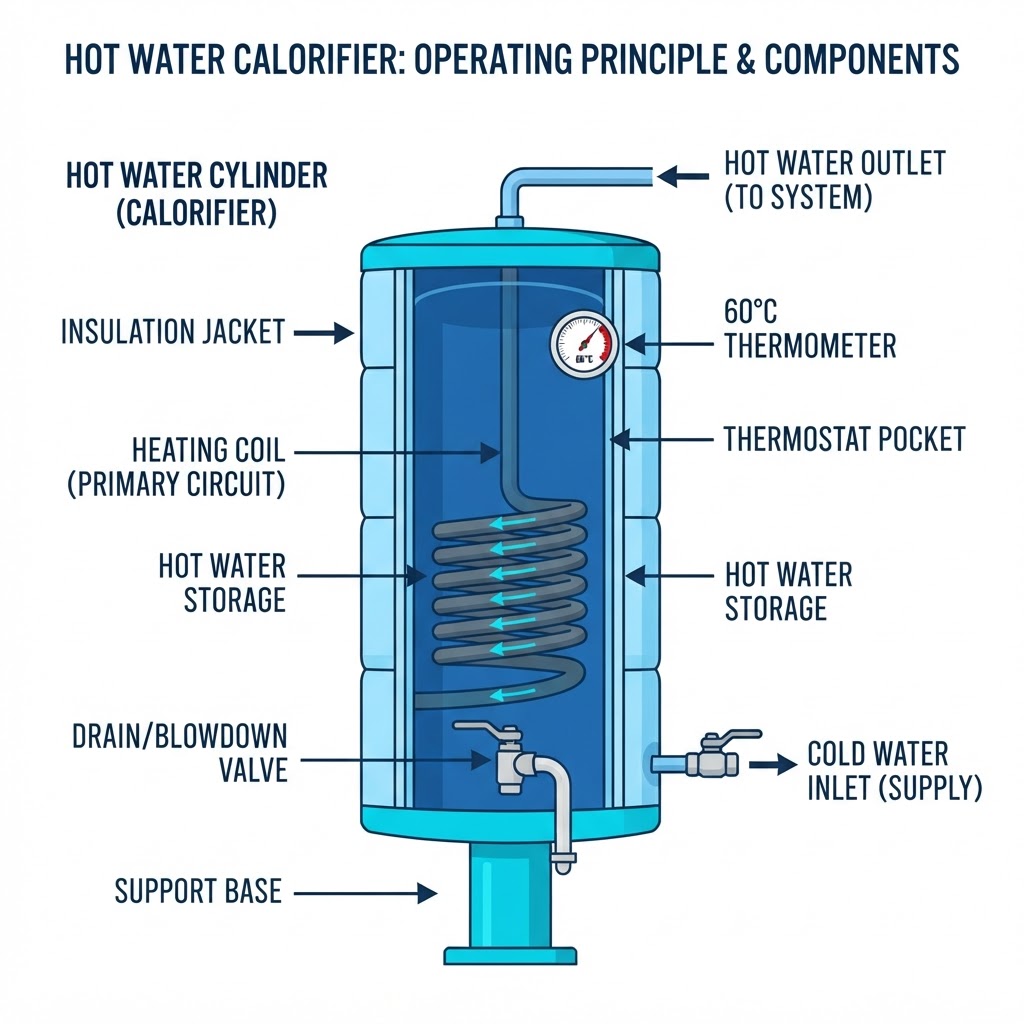
Water Systems
Checking a Hot Water Cylinder (Calorifier)
How to inspect hot water cylinders and do a blowdown to remove dirt.
What is a Calorifier?
A calorifier is a hot water cylinder. It stores hot water at 60 degrees C or hotter to kill Legionella bacteria. Over time, dirt and sediment build up at the bottom where bacteria can grow.
What to Check
Temperature
- Water leaving the top: 60 degrees C or hotter
- Water returning: 50 degrees C or hotter (55 in hospitals)
Outside
- Check for leaks, rust, and damage
- Check the insulation is intact
- Check the temperature gauge works
- Check the drain valve works
Inside (if you can get in)
- Look for scale build-up
- Look for sediment (dirt) at the bottom
- Look for rust
- Check the anode (a part that stops rust) if fitted
How to Do a Blowdown
Blowdown means opening a valve at the bottom to flush out the dirt.
- Find the drain/blowdown valve at the bottom of the cylinder.
- Attach a hose and route it to a safe place. The water will be very hot (over 60 degrees C).
- Make sure the discharge point can handle hot water.
- Open the valve fully.
- Let the water run until it comes out clear (usually 30-60 seconds).
- Close the valve.
- Check the temperature goes back to 60 degrees C or hotter.
- Check for leaks after closing.
- Write down what you did.
How Often
- Blowdown: Once a year (or as the risk assessment says)
- Inside check: Once a year if you can access it
- Temperature check: Every month
Common Problems
- Temperature below 60 degrees C: Check the thermostat, the boiler/heater, and the circulation pump.
- Scale build-up: Think about descaling or water treatment.
- Lots of dirt: Do blowdown more often.
- Rusted anode: Replace it.
Warnings & Safety
Blowdown water is extremely hot (over 60 degrees C) and will scald. Make sure it goes to a safe place. Let parts cool before touching them.
Relevant Legislation
ACOP L8 (4th Edition), HSG274 Part 2, HTM04-01 (healthcare)